Ying Stone

Scholar's Rock - Ying StonePlace of origin:
Yingde County, Guangdong Province, and Guangxi Province

Mineral composition:

Limestone (calcite)

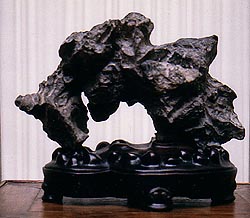
Tradionally produced in Yingde, Guangdong province and in Guanxi province, these rocks are limestone with calcite deposits. less hard than Lingbi, they are often full of furrows with twisted lines on intricately textured surfaces. Notable for their diverse shaped, they appear to embody a thousand hills and valleys, and so are well-suited for representing a far distant landscape. Their typical thin, wrinkled appearance often exhibits traces of sawing and cutting with distinguishable front and reverse sides. The best known example is called ‘Winkling Cloud Peak’ in Hangzhou’s West lake, China.
Our Best Partners: horario para jogar fortune ox lucky jet cash game pikakasino. com mr.play casino বাংলাদেশ অনলাইন ক্যাসিনো posido kasino tigre pg slot op rahan talletus লাইভ কেজি টাইম casino caxino

Mohu Black Ying Stone

Scholar's Rock - Mohu Black Ying StonePlace of origin:
Liujiang County, Guangxi Province

Mineral composition:
Limestones (calcite)

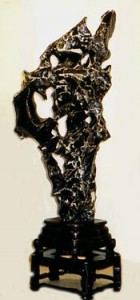
Also known as black Ying stones, these are formed by erosion of lake water. Like Taihu stones, they are characterized by their shou (thinness), zhou (wrinkles), lou (hollowness), and tou (transparency), but they are more diverse in shape and with gentle, smooth lines on the surface. In addition, collectors take a great fancy to the pitch black color of Mohu stones. Other Mohu stones have white streaks on the surface; those with many gorgeous white streaks are know as “white-streaked Mohu stones” (baihuamohu), a rare and precious stone type.

Smooth, elegant, and with gently undulating lines on the surface, Mohu stones excel in the features of traditional scholars’ rocks, resemble modern art as well, and so appeal to the tastes of interior designers. Mohu stones appear in colors other than black, including, deep gray, but these are not commonly seen. Like Taihu stones, Mohu stones are not as hard as Lingbi and Ying stones.

Our Best Partners: casino gpay https://luckyjetslots.com/tg/ fishin frenzy all stars free play mines simulador siirto maksu casino new casinos no deposit caxino que horas o fortune rabbit paga casino sivustot cadabrus casino

Zibowen Stone

Wen rocks are found in Zibo, Shandong province. They are decayed rocks composed of lime, granite or clay stone. Aesthetically wen rocks have a naturalness and antique simplicity. They have a weathered look with dots or crossing lines on the surface and a variety of wrinkled forms. Among this type are aragonite rocks which are usually black and very hard. Wen rocks portray a feeling of “pu.”

Our Best Partners: best google pay casinos fortune rabbit paga mesmo nye casino 2025 lucky jet hindi crazy time a crazy time today 10€ talletus lucky jet meaning mina jogo aposta https://slot-pgsoft.com/futebol-fever/

Yellow Wax Stone

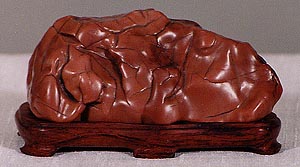
Yellow wax rocks are found in many places in China including Guangdong, Guanxi, and Ganxu but not in great quantity. Their gentle shape and smooth texture is neither thin nor perforated, but dense. Composed either of andesite with silica or sandstone, they seem hard as jade. A distinctive feature of yellow wax rocks is their purity of color.

Our Best Partners: op talletus online casino mit google pay einzahlen bingobonga casino https://luckyjetwins.com/signals/ play fishin frenzy fortune spins online jogos fortune ox pikakasino como jogar o jogo fortune mouse pikasino https://luckyjetslots.com/tr/

Petrified Wood

Scholar's Rock - Petrified WoodPlace of origin:
Hami, Xinjing Province; Beijing, Liaoning Province; Zhejiang Province

Mineral composition:
Elements resulting from silicification, ironization, and calcification

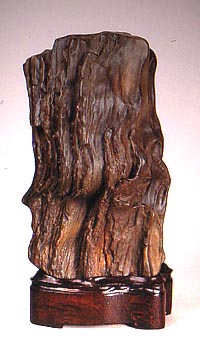
Muhuashi derives from wood buried in the earth a hundred million years ago that has silicified over time, a process that yields some good stones for the studio. Xylon in the wood has been replaced by silicon dioxide (SiO2), but the wood texture remains. Petrified wood is quite hard and most are brown or yellowish brown. They have a jade-like feel and were objects of appreciation as early as the Tang dynasty. There are two examples of petrified wood collected in the Ming dynasty in Zhejiang province.

Fengli Stone

Scholar's Rock - Fengli StonePlace of origin:
Deserts of Inner Mongolia and Hami, Xinjiang

Mineral composition:
Quartz, agate, jasper, protein, chalcedony

Obtained in the provinces of Xinjiang, Inner Mongolia, and the Gobi desert of Ganxu, fengli are stones that have been naturally ground or worn down by the action of wind and sand or subsurface heat. They are usually less than 20 centimeters across. Their diverse shapes are due in part to their size: smaller stones are more likely to be subjected to the action of these natural forces. They may be composed of agate, jade, opal, quartz, or crystal, and the differences in their mineral content account for their variety of color. Fengli are usually white, grey, red, or brown. Beautifully shaped, they are admired for their variety and striking texture.

Our Best Partners: https://crazytime-bangladesh.com/ nye casinoer i danmark lucky jet prediction https://luckyjetwins.com/download/ pay and play casinos オンラインカジノ スロット moon princess online casino ei rekisteröitymistä pay n play casinos kasinot suomi 1win lucky jet strategy