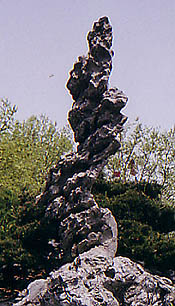
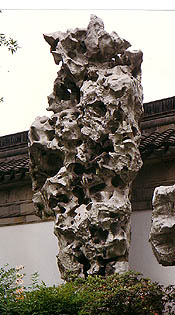
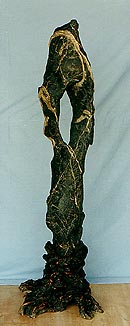
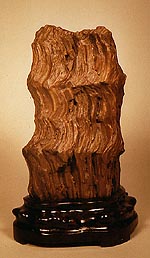
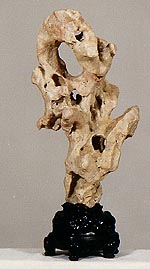
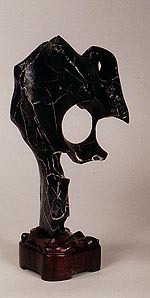
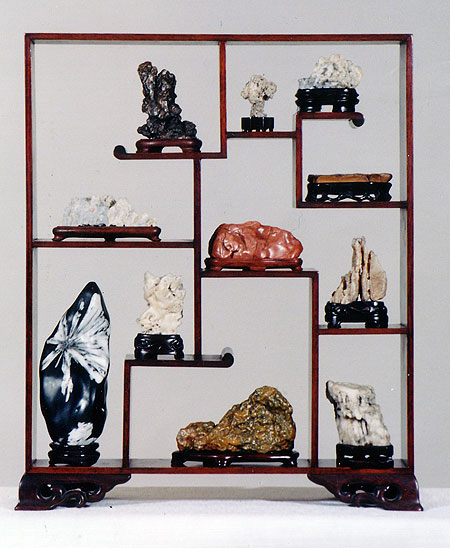
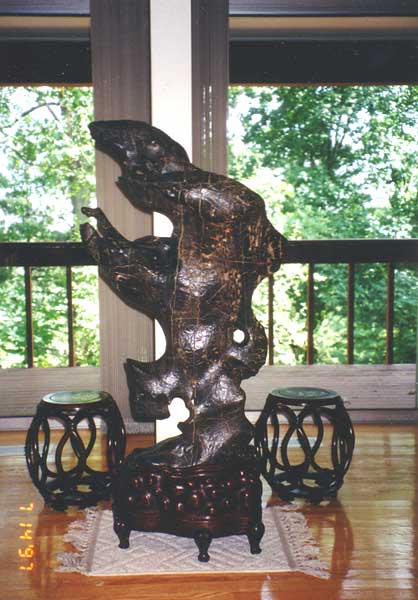
 ‘Scholar’s rock’ is the name commonly given to gongshi in the West. I much prefer the use of ‘spirit stone’ as it is more in keeping with the fundamental Chinese appreciation of their spiritual aspects. The term ‘spirit stone’ also evokes the deeper Daoist symbolism that was the basis for the original interest among Tang, Song, and Ming literati in these objects. Whereas ‘scholar’s rock’ reflects basic tenets of Western connoisseurship which is essentially analytical and investigative. Hence the vital role of provenance and the focus placed on appreciation of man-made objects.
Western study is objective and scientific and generally lacks or downplays the spiritual challenge of Chinese art. Thus it is difficult to appreciate objects in their natural form. New York’s Museum of Modern Art has no natural objects in their collection, and apart from a few spirit stones, The Metropolitan Museum of Art has only man-made objects. Consequently, there is a tendency to regard rocks as geological rather than spiritual objects and to appreciate them by rock type rather than for their aesthetic appeal.
 I began collecting rocks in my twenties, more than sixty years ago. Ever since, my interest has never diminished. Western painters use human bodies as models while we landscape painters prefer rocks. Human beings, despite differences in appearance, height, proportion and weight, are on the whole not much different from one another. Rocks come from nature, and they are God’s masterpieces, widely different in shape, material, color, texture, and, more importantly, in artistic conception and charm. To depict a rock in a landscape is to paint its bones and frame. A good landscape painter has a profound understanding of the shape and surface texture of a rock.
 It is a time honored practice to display rocks in outdoor gardens or indoors on pedestals for appreciation. The great calligrapher and painter Mi Fu loved rocks to distraction. Bowing to them nearly everywhere he encountered them, he became known as ‘Mi the Eccentric’. The famous poet Su Shi had a passion for rocks as well and composed many beautiful verses about them: