|
1/21/2009 Update: Holiday Special Prices have officially ended. If you missed this promotion, be the first to be notified of our next promotion by subscribing via Due to the positive response to the 37 new scholars’ rocks posted just last month, we’ve added 30+ more rocks for purchase. Holiday special prices end 1/4/09. New Scholar Rocks and JadeWe have also updated our gallery of small-sized scholar rocks with 5 new scholar rocks. |
Author: Kemin Hu
 Free Email Updates
 Free RSS Updates
Get Ready for the Holidays with 37 New Scholar Rocks for Purchase
New Small and Medium-sized Scholar Rocks
We have updated our gallery of small-sized scholar rocks with 10 new scholar rocks.
We have also updated our gallery of medium-sized scholar rocks with 7 new scholar rocks.
New Holiday Special of Scholar Rocks
As many of you know, once a year, we include a Holiday Specials gallery to prepare for the upcoming Holiday season. This year, we have included two galleries with 20 new scholar rocks for sale.
Our Best Partners:
https://slot-pgsoft.com/gemstones-gold/
baji live crazy time
como ganhar no jogo dragon hatch
moon princess power of love
moon princess 100 free
jogo das mina
casino nopea kotiutus
fortune rabbit como ganhar
parhaat uudet nettikasinot
play and win on strategy lucky jet money casino
Kemin at Asia Society – Scholars’ Rock Special Sale Event
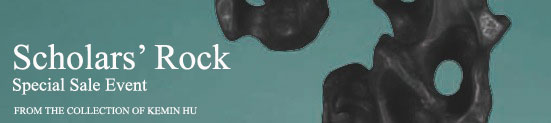
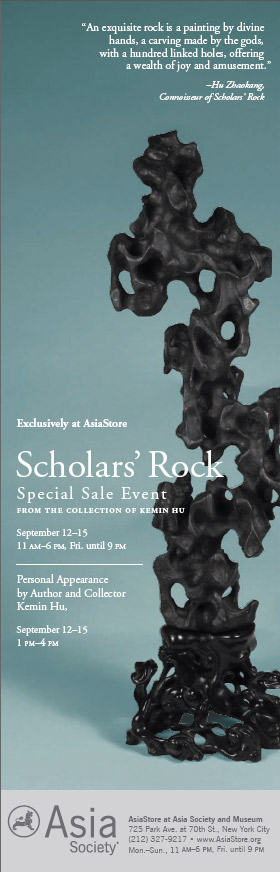
Asia Society’s AsiaStore is holding a Scholars’ Rock – Special Sale Event featuring Scholars’ Rocks from Kemin’s collection. Kemin will be at the event and she hopes to see you all there!
September 12-15, 2008 (Friday – Monday)
11 AM – 6 PM, Friday until 9 PM, Free AdmissionPersonal Appearance by Author and Collector Kemin Hu,
September 12-15, 1 PM – 4 PM
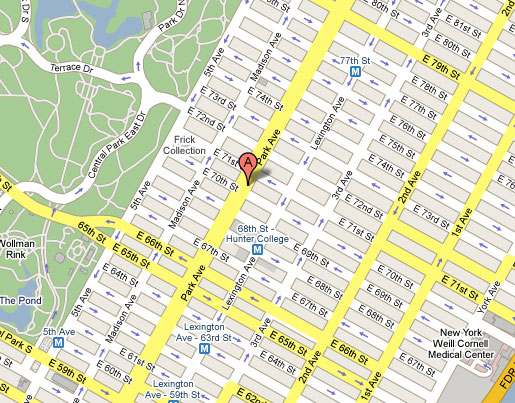
AsiaStore at Asia Society and Museum is located at:
725 Park Ave. at 70th Street, New York City; 212-327-9217
Read more: Asia Society’s Interview with Kemin Hu
Welcome to Spirit-stones.com’s new home!
We have updated our website to better serve your interest in Scholars’ Rocks. Our new spirit-stones.com blog will keep you informed on news, events, books and other education content on Scholars’ Rocks. Like any other blog, you can subscribe to our content feed and keep up to date automatically.
As always, you will find Scholars’ Rocks for purchase in the purchase section. Please feel free to explore the new site starting with the links on the top of the page. We realize the navigation of our new home is somewhat different from our old “red” website so please let us know what you think by writing to us with your feedback and comments. Thanks!
Best Regards,
Kemin
The Symbolism of Chinese Rocks – Essay by Richard Rosenblum
 The French scholar Rolf Stein stated that early Chinese believed that somewhere in the highest mountains there was a cave that was an exact representation of the world outside. In its center was a stalactite that gave off the milk of contentment. Any rock that suggests a mountain, cave or stalactite became symbolically important. This idea is reinforced by the Chinese notion that in addition to north and south, east and west, the most important orientation was ‘in’. it is because of this inward focus that Chinese culture looked for paradise inside of things, just as western culture looked upward and outside. in Chinese art, this orientation caused a search for ‘a world within a world’, for imagery in surprising and unpredictable places.
Let’s imagine that early Chinese lived in limestone caves. We know that karst limestone caves are common in China, and that among their characteristics are endlessly winding tunnels. They have underground streams and lakes, skylights, even fish. The geography of this world was so complex, that people would not be able to explore and map them in a dozen lifetimes. Paradoxically, when they emerged from these caves, they could readily see and walk around the small mountains that contained these ‘worlds within worlds’.
Spirit Stones – Essay by Ian Wilson
 ‘Scholar’s rock’ is the name commonly given to gongshi in the West. I much prefer the use of ‘spirit stone’ as it is more in keeping with the fundamental Chinese appreciation of their spiritual aspects. The term ‘spirit stone’ also evokes the deeper Daoist symbolism that was the basis for the original interest among Tang, Song, and Ming literati in these objects. Whereas ‘scholar’s rock’ reflects basic tenets of Western connoisseurship which is essentially analytical and investigative. Hence the vital role of provenance and the focus placed on appreciation of man-made objects.
Western study is objective and scientific and generally lacks or downplays the spiritual challenge of Chinese art. Thus it is difficult to appreciate objects in their natural form. New York’s Museum of Modern Art has no natural objects in their collection, and apart from a few spirit stones, The Metropolitan Museum of Art has only man-made objects. Consequently, there is a tendency to regard rocks as geological rather than spiritual objects and to appreciate them by rock type rather than for their aesthetic appeal.