Category: News and Events
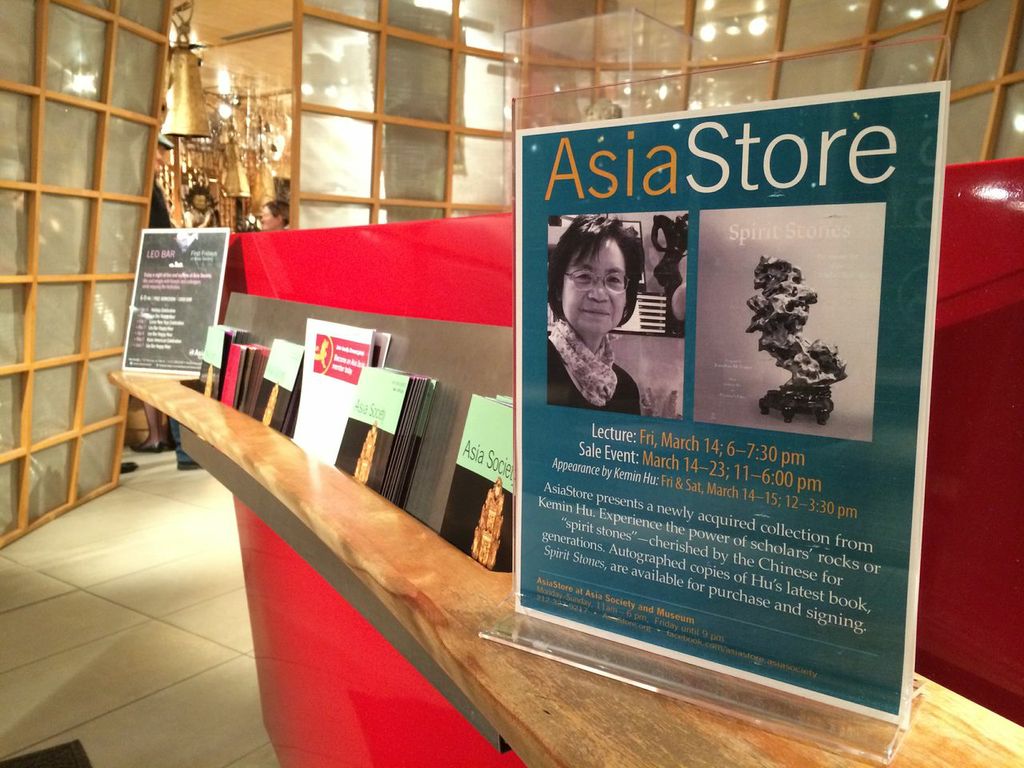
Lecture by Kemin Hu: The Ancient Art of Scholar’s Rocks
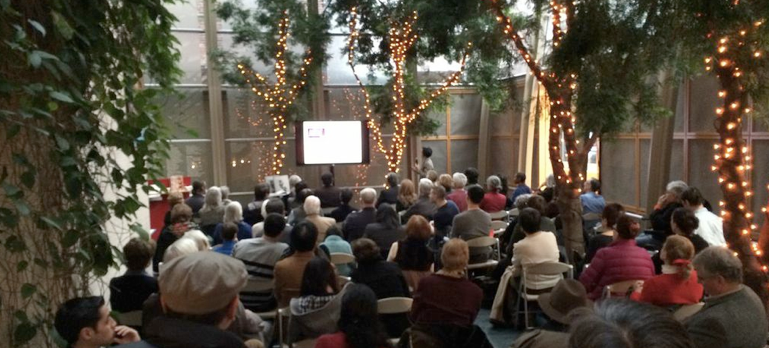
14 March 2014, 6:00pm – 7:30pm
Asia Society – 725 Park Avenue (at East 70th Street), New York, NY
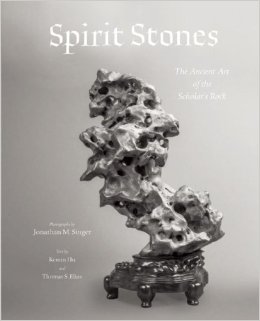
Kemin Hu, one of the foremost experts on “spirit stones,” discusses the ancient art of the scholar’s rock and stone appreciation, describing the various stones, their history and characteristics, as outlined in her latest book, Spirit Stones: The Ancient Art of the Scholar’s Rock (Abbeville Press), co-authored by Thomas S. Elias, with photography by Jonathon M. Singer. Books available for purchase and signing at event.
Event page on AsiaSociety.org
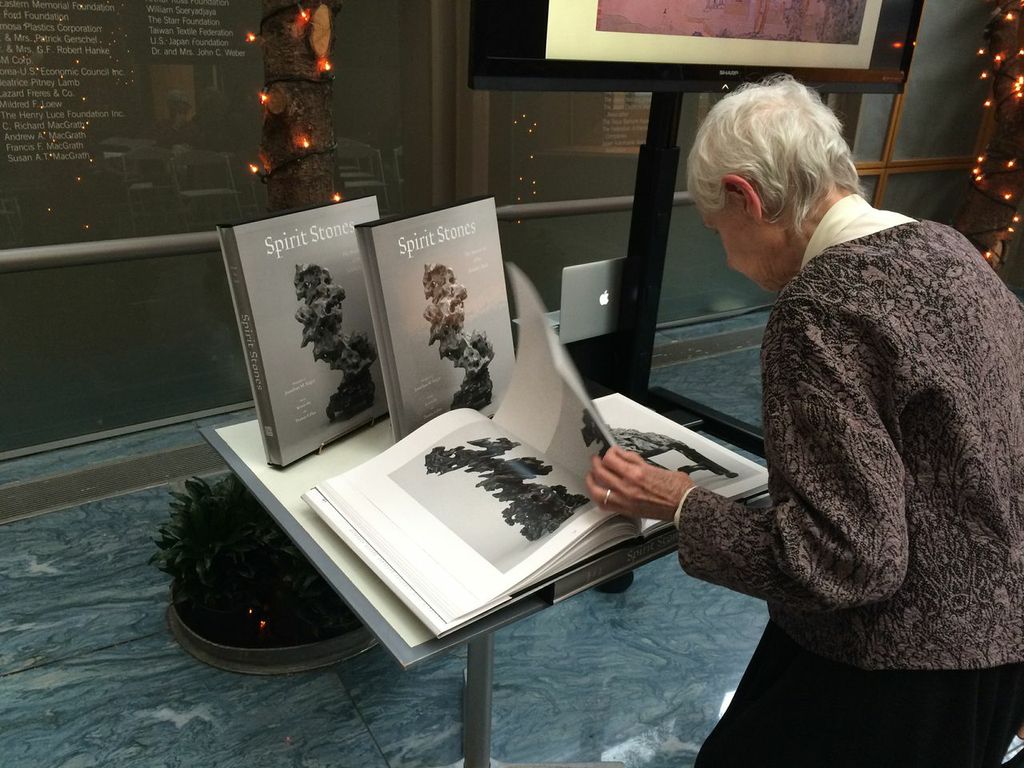
Book: Spirit Stones – The Ancient Art of the Scholar’s Rocks
Spirit Stones – The Ancient Art of the Scholar’s Rocks
Text by Kemin Hu and Thomas S. Elias
Photography by Jonathan Singer
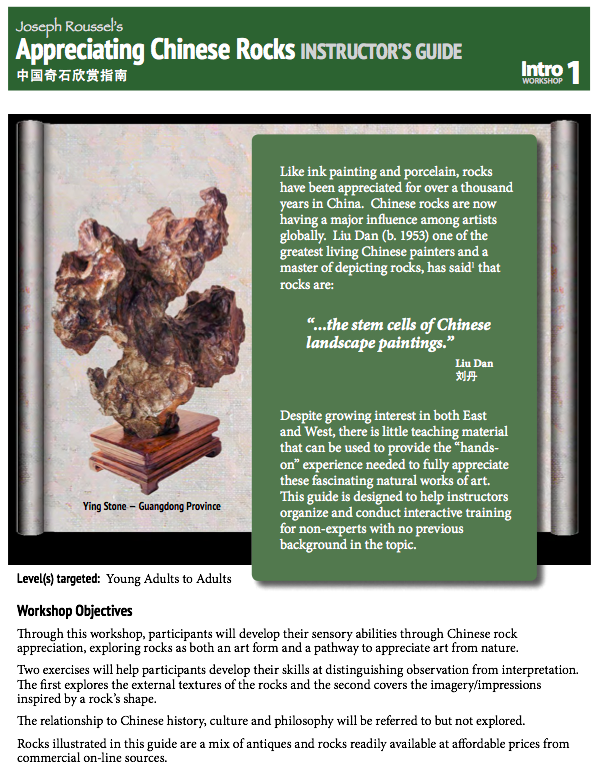
Brilliant photographs of scholars’ rocks, or Chinese ornamental stones, from a leading collection. Shaped by nature and selected by man, scholars’ rocks, or gongshi, have been prized by Chinese intellectuals since the Tang dynasty, and are now sought after by Western collectors as well. They are a natural subject for the photographer Jonathan Singer, most recently acclaimed for his images of those other remarkable hybrids of art and nature, Japanese bonsai.
Here Singer turns his lens on some 150 fine gongshi, ancient and modern, from the world-class collection of Kemin Hu, a recognized authority on this art form. In his photographs, Singer captures the spiritual qualities of these stones as never thought possible in two dimensions; he shows us that scholars’ rocks truly are, in Hu’s words, “condensations of the vital essence and energy of heaven and earth.”
Hu contributes an introductory essay on the history and aesthetics of scholars’ rocks, explaining the traditional terms of stone appreciation, such as shou (thin), zhou (wrinkled), lou(channels), and tou (holes). She also provides a narrative caption for each stone, describing its history and characteristics.
Abbeville Press, 2014
15.7 x 12.6 x 1.6 inches Paperback, 216 pages
Other Books on Scholars’ Rocks by Kemin Hu
- Spirit Stones – The Ancient Art of the Scholar’s Rocks (2014)
- The Romance of Scholar’s Stones: Adventures in Appreciation (2011)
- Modern Chinese Scholars’ Rocks – A Guide for Collectors (2006)
- The Suyuan Stone Catalogue: Scholars’ Rocks in Ancient China (2002)
- The Spirit of Gongshi: Chinese Scholar’s Rocks (1998)
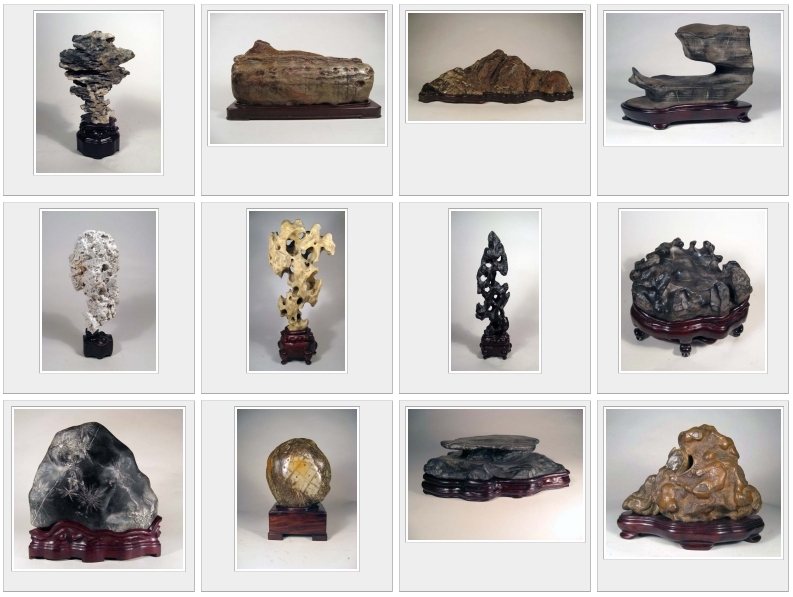
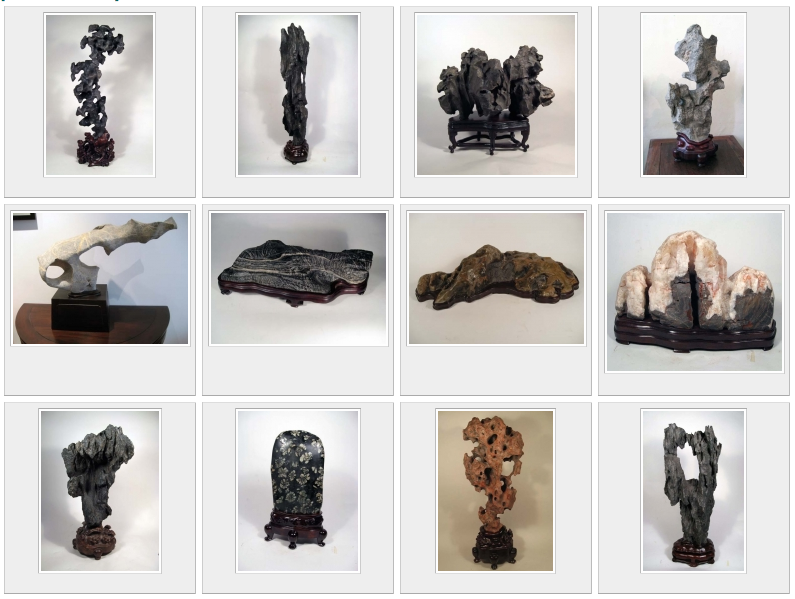
New Scholars’ Rocks in the Galleries – Summer 2013
|
Be one of the first to be notified of gallery updates or promotions by following @scholarsrocks on twitter or like Scholars Rocks on Facebook More than 30 New Scholar Rocks in the Spirit-stones.com Galleries
|
The Romance of Scholar’s Stones: Adventures in Appreciation
The Romance of Scholar’s Stones: Adventures in Appreciation
by Kemin Hu
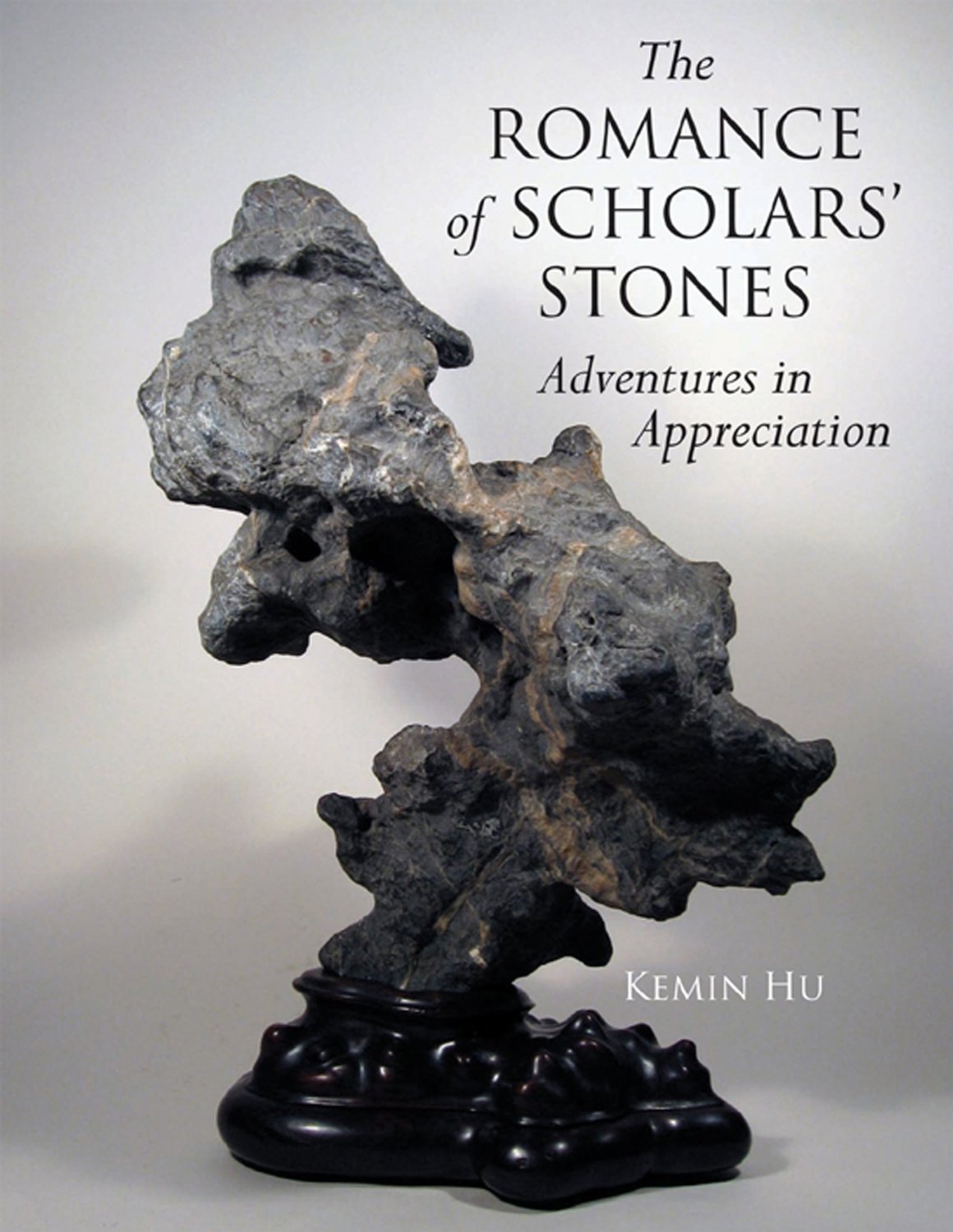 Although Chinese scholars’ stones fascinate, they do not speak; they reveal their mysteries only grudgingly to those who take the time to observe and to investigate. In seven essays the author relates important lessons learned over a lifetime of collecting and researching these intriguing creations of nature. What did Chinese connoisseurs of a thousand years ago mean by the enigmatic terms shou, zhou, lou, and tou? Were “ink mountain stones” the earliest collected stone form, and were they valued primarily for their utilitarian function? What are the “Qingzhou stones” mentioned in one early text, but ignored in subsequent writings? What should we be looking for when we evaluate an ancient stone? How can we tell if it is ancient without written records and how much weight can be given any documentation? Finally, using the tools of connoisseurship and textual evidence, is it possible to verify that a stone first collected in the former Han dynasty is the stone we are looking at today?
In exploring these and other issues, Kemin Hu illuminates a depth and complexity of stone appreciation not touched upon in other publications, yet understood and appreciated by serious modern collectors as well as Chinese stone lovers of old.
$50 – buy from Amazon
2011-2012
11.2 x 8.9 x 0.7 inches Hardcover, 160 pages
Other Books on Scholars’ Rocks by Kemin Hu
- Spirit Stones – The Ancient Art of the Scholar’s Rocks (2014)
- The Romance of Scholar’s Stones: Adventures in Appreciation (2011)
- Modern Chinese Scholars’ Rocks – A Guide for Collectors (2006)
- The Suyuan Stone Catalogue: Scholars’ Rocks in Ancient China (2002)
- The Spirit of Gongshi: Chinese Scholar’s Rocks (1998)
Exhibition Review: Spirit Rock, Sacred Mountain: A Chinese View of Nature
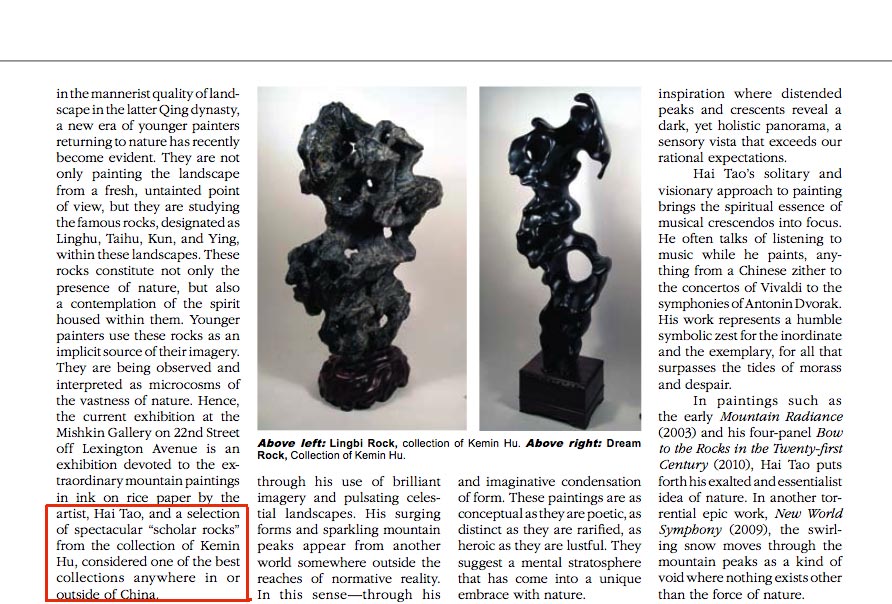
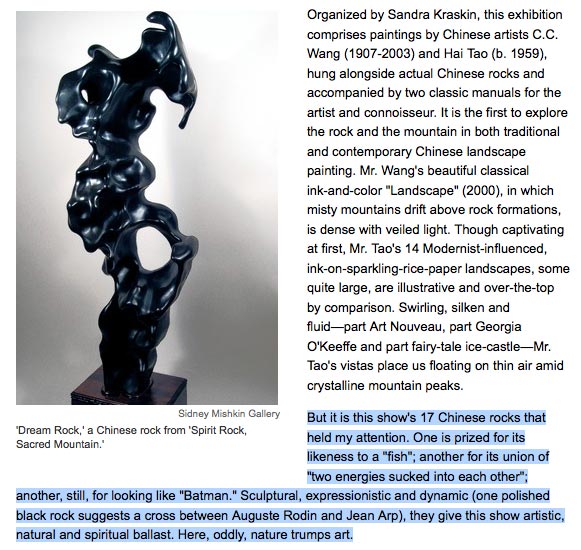
This exhibition, featuring Kemin Hu’s rock collection and mountain paintings by Hai Tao and C.C. Wang, was held this year from February to April at Baruch College’s Sidney Mishkin Gallery in New York City. The exhibition was well received by many. For some, it was their first time learning about Scholars’ Rocks and seeing them up close. The exhibition especially the 17 Scholars’ Rocks had “held the attention” of major newspapers and Asian art magazine:
“Rock, Paper, Sculpture” Wall Street Journal, by Mr. Lance Esplund, March 5, 2011
Arts of Asia magazine, by Dr. Robert C. Morgan, May 2011 issue.